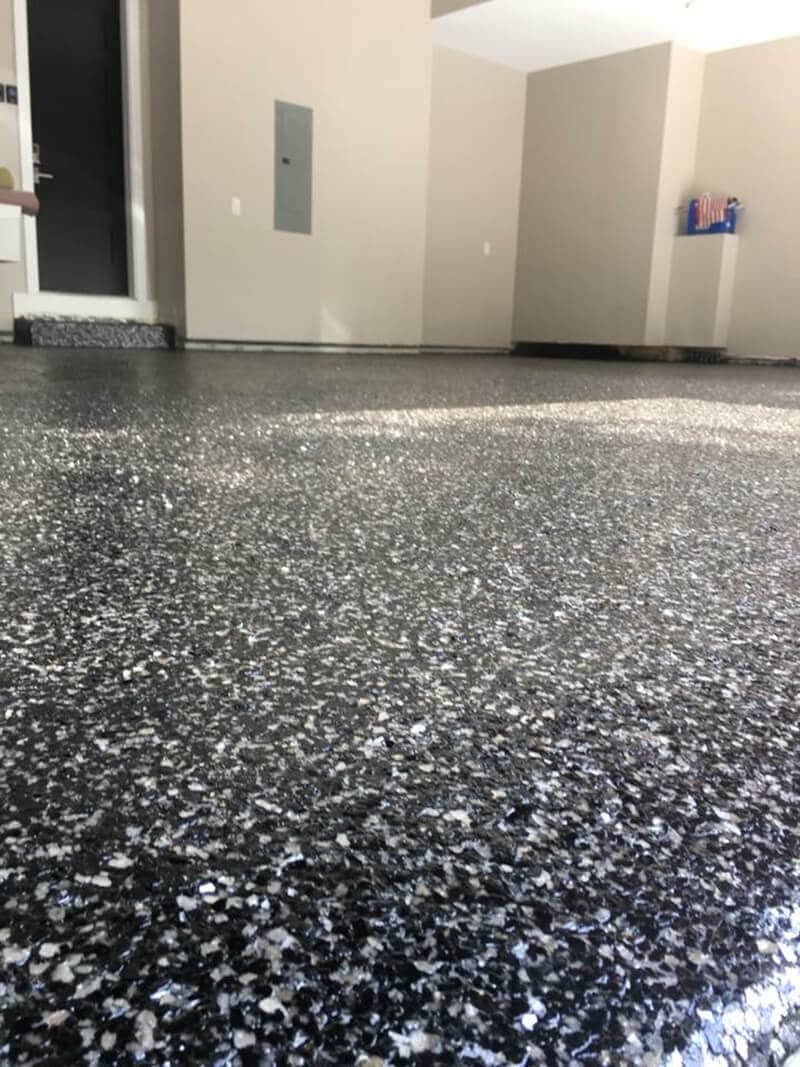
Industrial Epoxy Flooring Contractor In Minnesota
Heavy-Duty Floor Coatings For Warehouses, Plants, And Distribution Centers
The Concrete Guy installs industrial epoxy flooring in manufacturing plants, warehouses, cold storage facilities, aircraft hangars, maintenance shops, and distribution centers throughout Minnesota and across the country. Large, complex, specification-driven floors are what our commercial division is built for.
Our crews bring industrial grinders, shot blasters, moisture testing equipment, and manufacturer-trained installers to every site. We phase the floor around your production schedule, work nights and weekends when required, and hand back a surface rated for the forklifts, chemicals, and traffic your operation runs every shift.
Industrial Epoxy Flooring Explained
Industrial epoxy is a high-build resinous flooring system engineered for facilities where standard coatings fail. It combines a penetrating primer, one or more 100 percent solids epoxy body coats, optional quartz or aggregate broadcasts for impact and slip resistance, and a chemical-resistant polyaspartic or urethane topcoat.
The result is a seamless, non-porous floor that tolerates forklift and pallet jack traffic, point loads from racking, abrasion from steel wheels, and exposure to oils, solvents, acids, and cleaning chemicals. Line striping, hazard zones, and pedestrian walkways are installed in the system so they do not wear away.
For wet, hot, or thermal-shock environments such as food processing and beverage production, we pair or replace epoxy with urethane cement. For dry warehouses that mainly need dust control and reflectance, polished concrete can be a lower-cost alternative. We specify the system to the facility, not the other way around.
Industrial Floor Coating Experts With Statewide And National Reach
Our industrial crews are sized for large floors. Multi-shift installs, several hundred thousand square feet, and phased plant turnarounds are routine for us.
We own the full scope, including demolition of old flooring, coating removal, moisture vapor mitigation, joint and crack repair, cove base, and safety line striping.
Plant managers, general contractors, and corporate facility teams rely on our written specifications, cure schedules, and documented quality control.
Why Industrial Facilities Choose Epoxy Floor Systems
Rated for forklift and heavy equipment traffic
Seamless surface that will not trap contaminants
Lower lifecycle cost than replacing concrete
Integrated safety striping and zone colors
Abrasion resistance under steel wheels
Stops concrete dusting on production lines
Resists acids, solvents, oils, and caustics
15 to 25 year service life with basic care
Supports LEED and sustainability targets
Fast-cure topcoats shorten shutdowns
Improves lighting through reflectance
Impact resistance at docks and racking

Minnesota Industrial Epoxy Floors Delivered On Schedule
The Concrete Guy is headquartered in the Twin Cities and installs industrial epoxy floors for plants and warehouses across Minnesota, including Minneapolis, Saint Paul, Bloomington, Eagan, Burnsville, Maple Grove, and the surrounding industrial corridors. Our commercial division also mobilizes for multi-site and national facility programs.
Every industrial project starts with slab testing. We measure relative humidity and surface hardness, check for existing sealers and contamination, and confirm the chemical exposures on the floor plan before we write a specification. That front-end work is why our floors stay bonded.
What Facility Managers Say About Our Industrial Floors


Industrial Epoxy Flooring Applications

Manufacturing And Assembly Plants
Chemical-resistant epoxy and quartz systems for production lines, assembly areas, and maintenance bays. We color-code work cells, pedestrian paths, and hazard zones so the floor supports safety programs as well as throughput.

Warehouses And Distribution Centers
High-build solid color epoxy with polyaspartic topcoats rated for forklift lanes, racking point loads, and dock impact. Striping, staging areas, and anti-slip dock textures are built into the floor.

Aircraft Hangars And Fleet Facilities
Fuel, hydraulic fluid, and heavy wheel loads call for thick, chemically resistant systems. Our hangar and fleet maintenance floors deliver a bright, seamless surface with optional conductive and anti-slip options.

Cold Storage And Freezer Warehouses
Low-temperature cure materials and urethane cement systems that stay bonded through freeze and thaw cycles. We schedule installs around product moves and temperature pull-downs so inventory is protected.

Food And Beverage Processing
Urethane cement floors for processing lines, breweries, and commissaries exposed to hot wash-downs, organic acids, and sanitizers. Integral cove base and slopes to drain support USDA and health code expectations.

Chemical, Pharmaceutical, And Lab Spaces
Novolac epoxy and high chemical resistance topcoats for secondary containment, battery rooms, labs, and process areas. Seamless, easy to decontaminate, and installed with the documentation compliance teams need.
Industrial Epoxy Floor Systems We Install
Every industrial floor is a combination of preparation, body coats, texture, and topcoat chosen for the loads and chemicals in the space. Our team writes the specification after testing the slab and reviewing your process, then installs it with the cure times and phasing your schedule demands. Tap each system to see where it fits.

Industrial Epoxy Floors Built For Forklifts And Heavy Machinery
Our industrial epoxy floors are specified by compressive strength, thickness, and chemical resistance, not by brand name alone. Steel-wheeled carts, forklifts with hard tires, pallet drops, and racking legs all place concentrated loads on the slab, and the system has to transfer those loads without cracking or delaminating.
That is why preparation matters more than any product. We shot blast or diamond grind to a measured surface profile, repair joints and spalls with rigid or semi-rigid fillers, and install a moisture mitigation primer when testing calls for it. The body coats then go on at the thickness the specification requires, and the topcoat is chosen for the chemicals on your floor plan.
Four generations of Minnesota concrete experience go into every industrial floor we install, and our commercial clients get a written specification, a cure schedule, and a warranty they can hold us to.
Recent Industrial Flooring Projects
Industrial Epoxy Flooring FAQs
Can industrial epoxy floors handle forklifts and heavy machinery
Yes. High-build industrial epoxy systems are designed for forklift traffic, pallet jacks, steel-wheeled carts, and racking point loads. The key is thickness and preparation. We shot blast the slab for a mechanical bond, repair joints, and install body coats at the specified mil thickness so hard wheels and dropped pallets do not chip or delaminate the floor.
How does an industrial floor coating improve workplace safety
Industrial epoxy floors improve safety in several ways. Anti-slip aggregates in the topcoat provide traction in wet or oily areas. Color-coded zones, striped forklift lanes, and marked pedestrian walkways are installed in the coating so they stay visible. A light-reflective surface improves visibility, and a seamless floor eliminates the cracks and spalls that cause trips and equipment damage.
Is industrial epoxy flooring resistant to chemicals and spills
Standard industrial epoxy resists oils, fuels, hydraulic fluids, mild acids, and most cleaning chemicals. For strong acids, solvents, and caustics we specify novolac epoxy or urethane topcoats, and for hot, wet, thermal-shock conditions we use urethane cement. Share the chemicals in use and we will match the system to the exposure.
How much downtime does an industrial epoxy floor require
A typical 20,000 square foot industrial floor takes four to seven working days including preparation, with phased sections returning to foot traffic within 24 hours and forklift traffic within 48 to 72 hours. Fast-cure polyaspartic topcoats shorten that window, and night or weekend shifts keep production running during the install.
How long does an industrial epoxy floor last
Properly prepared and specified industrial epoxy floors last 15 to 25 years in heavy service, and the topcoat can be refreshed without removing the system. Floors fail early almost exclusively because of poor preparation, untreated moisture, or a system that was too thin for the loads, which is why our process starts with testing.
Do you install industrial floors outside Minnesota
Yes. Our commercial division is based in the Twin Cities and travels throughout Minnesota and nationwide for multi-site industrial, logistics, and food production clients. Send us the facility locations and timelines and we will confirm mobilization.
A Minnesota Concrete Family Serving Industry Nationwide
I am Matt Hage, owner of The Concrete Guy. My family has been in Minnesota concrete since 1920, and today our focus is industrial and commercial flooring for plant managers who need a contractor that understands slabs, moisture, and production schedules. We serve industrial facilities across the Twin Cities, including Minneapolis, Saint Paul, Eagan, Bloomington, Burnsville, Lakeville, Maple Grove, and Savage, and we travel for projects nationwide.
See our full range of commercial flooring applications and polished concrete floors, or request a plant walkthrough today.