
The best practices for epoxy floor maintenance in Minnesota focus on preserving durability, gloss, and surface integrity across industrial, commercial, and residential spaces. Epoxy flooring is valued for its seamless strength, versatility, and modern aesthetic appeal. In Minnesota, over 55% of warehouses and factories have adopted epoxy floors because of their ability to resist chemicals, impact, and moisture.
Epoxy creates a non-porous, smooth finish that resists abrasion, staining, and wear while maintaining easy cleanability. Epoxy floors adapt to diverse applications as it is available in multiple finishes, solid colors for functional industrial zones, metallic coatings for decorative interiors, and terrazzo blends with quartz or marble aggregates for premium spaces. Proper maintenance ensures that these surfaces retain their reflective shine, hygiene, and resilience over time.
What Is Epoxy Flooring?
Epoxy flooring is a resinous coating created by mixing epoxy resin with a hardener. The reaction forms a seamless, high-gloss, chemical-resistant, and abrasion-tolerant surface.
Industrial applications of epoxy floors include warehouses, factories, hospitals, and schools. Residential uses of epoxy flooring are growing, particularly in garages and modern interiors. Epoxy floors are also customized with logos, colors, or designs for aesthetic appeal.
What Are the Benefits of Epoxy Industrial Flooring?
The benefits of epoxy industrial floors include durability, hygiene, and customization. They resist chemicals, heavy traffic, and impact, making them ideal for industrial and commercial facilities.
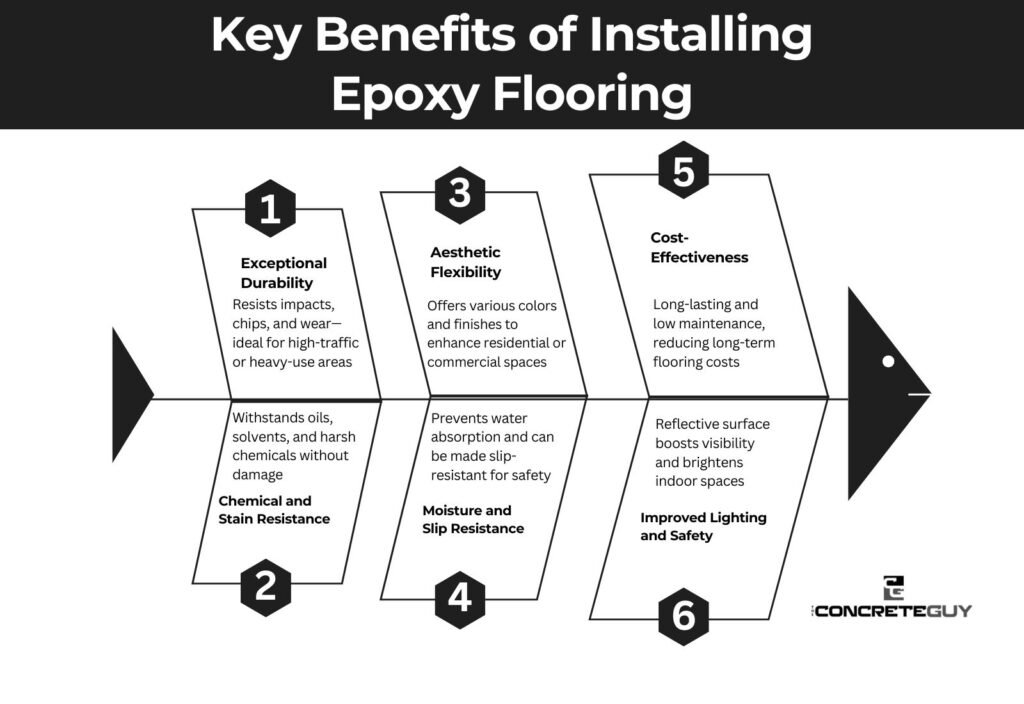
The benefits of epoxy industrial floors are as follows:
- Exceptional Durability: Epoxy floors form a strong, seamless surface that resists heavy loads, machinery movement, and continuous foot traffic. They are ideal for factories, warehouses, and production facilities.
- Chemical and Impact Resistance: Their non-porous surface withstands exposure to oils, solvents, and harsh chemicals without staining or deteriorating, ensuring long-term performance in demanding industrial environments.
- Hygienic and Easy to Clean: The smooth, joint-free finish prevents dirt, bacteria, and moisture from penetrating the surface, making sanitation quick and efficient in hospitals, laboratories, and food processing plants.
- Aesthetic Versatility: Available in solid colors, flakes, metallic finishes, or custom designs, epoxy floors enhance both functionality and visual appeal across commercial and industrial spaces.
- Cost-Effective Longevity: With proper installation and maintenance, epoxy floors reduce repair needs and replacement costs over time, offering a long-lasting return on investment.
Why Is Proper Epoxy Floor Maintenance Important?
Proper maintenance of epoxy floors is important because it preserves their appearance and functionality. Without appropriate care, floors scratch, stain, or degrade, leading to costly repairs.
Heavy equipment, dirt, sand, or spills damage the epoxy flooring. Regular cleaning prevents stains from oil, grease, or other chemicals, while maintaining hygiene and high-gloss shine. Maintenance also extends the lifespan of epoxy coatings, reducing replacement costs over time.
How Do You Clean Epoxy Floors?
You clean epoxy floors by regularly removing dirt, dust, and residues to maintain their gloss, safety, and longevity. Proper cleaning prevents surface wear, dullness, and buildup that can compromise the coating’s appearance and performance. Avoid abrasive pads, harsh chemicals, steam cleaners, or high-pressure washers, as they can scratch, dull, or degrade the epoxy surface over time.
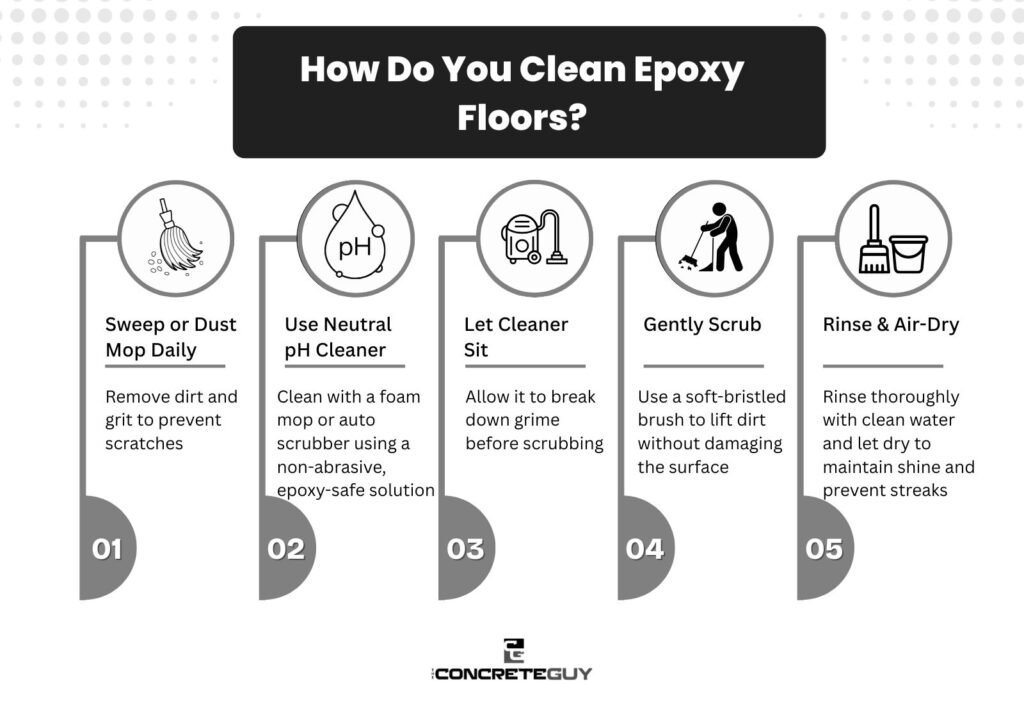
Employ the following techniques to clean epoxy floors:
- Sweep or Dust Mop Daily: Use a soft dust mop or broom to remove debris and grit that cause scratches or wear on the surface. Daily sweeping keeps the floor smooth and prevents dulling in high-traffic areas.
- Apply a Neutral pH Cleaner: Use a foam mop or auto scrubber with a neutral pH cleaner formulated for epoxy floors. This helps lift dirt and grease without damaging the resin or reducing its shine.
- Let the Cleaner Sit Briefly: Allow the cleaner to rest for a few minutes so it can break down stubborn grime and residue. This ensures a more effective deep clean without needing harsh chemicals.
- Agitate with a Soft-Bristled Brush: Gently scrub the surface to dislodge embedded dirt or oily films. This technique refreshes the finish while maintaining the integrity of the epoxy coating.
- Rinse Thoroughly and Air-Dry: Rinse with clean water to remove detergent residue, then let the surface dry completely. Proper rinsing prevents streaks and preserves the floor’s glossy, polished look.
How To Keep Epoxy Floors Shiny?
To keep epoxy floors shiny, it’s essential to maintain a consistent cleaning routine and protect the surface from wear and abrasion. Regular upkeep preserves the glossy finish, enhances light reflection, and extends the floor’s lifespan.

To keep epoxy floors shiny, follow the tips below:
- Clean Daily and Remove Debris: Sweep or dust mop the floor daily to eliminate grit, dust, and dirt particles that can cause micro-scratches and reduce shine over time.
- Apply High-Quality Wax or Polish Periodically: Use a non-slip, high-quality epoxy-safe polish every few months to restore luster and protect the surface from scuffs and chemical exposure.
- Use Floor Mats or Rugs in High-Traffic Areas: Place mats near entrances or busy zones to reduce wear and prevent debris from being tracked across the floor.
- Protect Floors with Furniture Pads: Install felt or rubber pads under furniture legs and heavy equipment to prevent scratches and dents on polished surfaces.
- Hire Professional Buffing and Refinishing Services: For industrial or high-traffic environments, periodic professional buffing enhances gloss uniformity and removes dull film buildup, keeping the epoxy surface mirror-smooth and reflective.
What Are the Do’s and Don’ts of Epoxy Floor Maintenance?
The do’s and don’ts of epoxy floor maintenance ensure the surface retains its durability, shine, and visual appeal over time. Whether in commercial, industrial, or residential settings, consistent care is essential for preserving the floor’s high-gloss finish and structural integrity.
The Do’s of Epoxy Floor Maintenance:
- Sweep or Dust Mop Regularly: Daily sweeping removes grit and debris that scratches or dulls the epoxy surface, keeping it smooth and glossy.
- Clean with Neutral pH Solutions: Use a mild, pH-neutral cleaner to lift dirt without damaging the resin bond or dulling the finish.
- Apply Wax or Polish to Restore Shine: Periodically applying a high-quality epoxy-safe polish rejuvenates the surface and adds an extra protective layer.
- Protect High-Traffic Areas with Mats: Place mats at entry points and work zones to reduce wear and prevent dirt accumulation.
- Use Pads Under Furniture: Attach protective pads to furniture and equipment legs to avoid scratching or denting the epoxy coating.
The Don’ts of Epoxy Floor Maintenance:
- Avoid Abrasive Cleaners or Harsh Chemicals: Strong acids, solvents, or gritty cleaners etch and discolor the surface, reducing its shine.
- Do Not Drag Heavy Objects: Dragging machinery or furniture gouges the epoxy layer; always lift or use sliders when moving heavy items.
- Avoid Letting Liquids Sit on the Floor: Standing water, oils, or chemicals seep into seams or cause discoloration if left for too long.
- Do Not Use Steam or Pressure Washing: Excessive heat or pressure weakens the epoxy bond and causes peeling or surface damage.
How Do Industrial Epoxy Floors Differ in Maintenance?
Industrial epoxy floors differ in maintenance as they require stronger cleaning solutions and more frequent attention. Heavy-duty cleaners remove accumulated dirt and grime. Periodic wax or polish restores high-gloss finishes.
Floor mats and furniture pads reduce wear in busy areas. Professional services like buffing, polishing, or recoating extend durability and maintain aesthetics in factories, warehouses, or commercial buildings.
Why Hire a Professional for Epoxy Floor Maintenance in Minnesota?
Hiring a professional for epoxy floor maintenance in Minnesota ensures your flooring maintains its strength, gloss, and safety despite the state’s varying climate conditions. Certified technicians understand the right products, curing times, and polishing methods suited to local environments.
The professional expertise helps prevent scratches, uneven wear, and surface dulling. For high-traffic commercial or industrial settings, professional maintenance minimizes downtime and extends the lifespan of your floors while keeping them clean, slip-resistant, and visually appealing.
How Often Should Epoxy Floors Be Cleaned?
Epoxy floors should be cleaned daily using a soft broom or dust mop to remove debris and prevent scratches. In high-traffic areas such as warehouses or garages, deeper cleaning with a neutral pH cleaner once or twice a week helps preserve the shine and prevents the buildup of dirt or residue.
Can Epoxy Floors Be Damaged by Chemicals?
Yes, although epoxy floors are highly resistant to most chemicals, exposure to strong acids, solvents, or industrial cleaners can cause surface discoloration or dulling. Prompt cleanup of spills and using only recommended neutral cleaners will help maintain the coating’s integrity and appearance.
How Long Does Epoxy Flooring Last with Proper Maintenance?
With regular cleaning and scheduled professional maintenance, epoxy flooring can last anywhere from 10 to 20 years. Industrial and commercial floors that receive timely re-polishing and protective coating applications last even longer, maintaining both performance and aesthetic quality.
What are the best epoxy floor designs for residential and commercial spaces?
The best epoxy floor designs for residential and commercial spaces include metallic epoxy for a luxurious, reflective finish; decorative flake epoxy for texture and slip resistance; quartz or terrazzo-style epoxy for a polished, speckled look; and solid-color epoxy for clean, minimalist appeal. Commercial spaces use patterned, geometric, or branded epoxy for visual impact and safety zoning, while homes favor metallic and flake finishes for durability and aesthetics.


